Role of Anti-Cheat Scripts in Competitive Play
07. Februar 2026
Every serious FPS gamer knows the frustration of battling random recoil and inconsistent aim in heated Valorant or CS2 matches. As cheating tactics grow more advanced, competitive players face a constant challenge to protect their gameplay from unfair manipulation. This article examines how anti-cheat scripts use signature detection, real-time behavior analysis, and AI models to preserve game integrity and fairness, providing insights into the evolving struggle between cheat developers and game security.
Table of Contents
- Defining Anti-Cheat Scripts And Their Purpose
- Core Methods: Signature, Behavior, And AI Detection
- How Cheat Scripts Attempt To Evade Detection
- Legal And Ethical Implications For Script Users
- Impact On Game Integrity And Player Communities
Key Takeaways
| Point | Details |
|---|---|
| Role of Anti-Cheat Scripts | Anti-cheat scripts are essential for maintaining fairness in competitive gaming by detecting unauthorized advantages. They employ multiple detection methods, including signature-based, behavior-based, and AI-driven strategies. |
| Evasion Techniques | Cheat scripts use sophisticated methods to evade detection, such as code obfuscation and memory injection, challenging the effectiveness of anti-cheat systems. |
| Legal and Ethical Risks | Users of cheat scripts face significant legal and ethical consequences, including account suspensions and loss of reputation within gaming communities. |
| Impact on Game Integrity | Cheating undermines trust and competition in gaming, potentially leading to player disengagement and economic losses for game developers. |
Defining Anti-Cheat Scripts and Their Purpose
In competitive gaming environments, anti-cheat scripts serve as sophisticated digital guardians designed to protect gameplay integrity and fairness. These specialized software tools work systematically to detect and prevent unauthorized advantages that could compromise the competitive experience. Multiple detection layers enable them to monitor player behaviors and identify potential misconduct.
The primary objectives of anti-cheat scripts are comprehensive and multifaceted:
- Identify unauthorized game modifications
- Prevent bot attacks and automated gameplay
- Monitor player actions for suspicious behaviors
- Maintain a level competitive playing field
- Protect game ecosystem from exploitative tactics
Kernel-level monitoring represents a critical component of these defensive systems. By examining game data at the deepest software interaction levels, anti-cheat scripts can detect minute irregularities that might indicate cheating attempts. Sophisticated cybersecurity frameworks underpin these advanced detection mechanisms, ensuring continuous adaptation against evolving cheating strategies.
Modern anti-cheat platforms go beyond simple rule enforcement, functioning as intelligent systems that learn and update dynamically. They integrate complex algorithms analyzing player movements, input patterns, and game state interactions to distinguish between legitimate skill and artificial manipulation. This approach creates a robust defense mechanism that preserves competitive gaming’s fundamental principles of fairness and skill.
Pro tip: Always keep your anti-cheat scripts updated to ensure maximum protection against the latest cheating techniques.
Core Methods: Signature, Behavior, and AI Detection
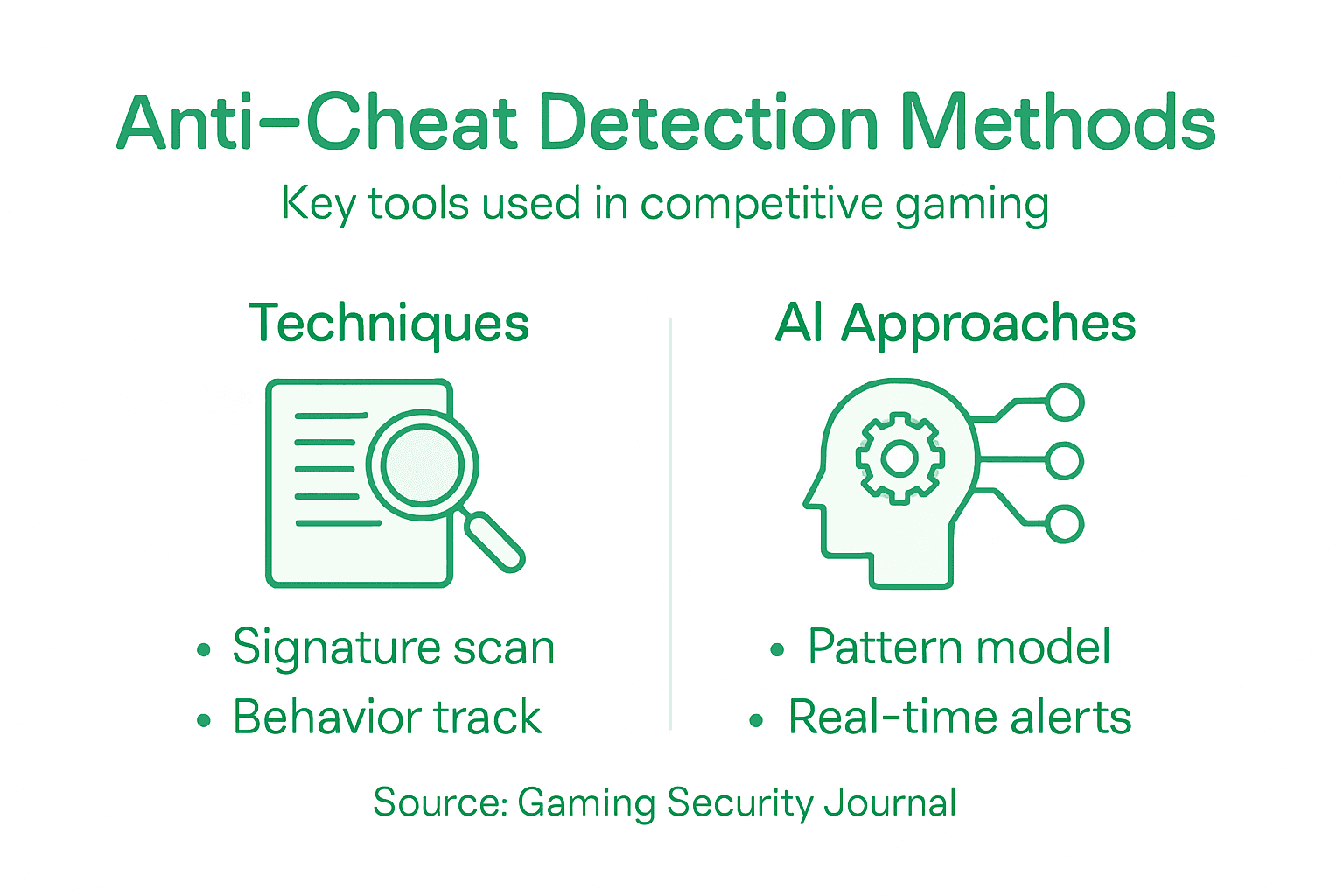
Competitive gaming anti-cheat technologies employ three sophisticated detection strategies that work in concert to identify and prevent cheating: signature-based, behavior-based, and AI-driven detection. Advanced detection techniques leverage multiple approaches to create a comprehensive defense against unauthorized gameplay modifications.
The core detection methods include:
- Signature-based detection: Scanning for known cheat software code patterns
- Behavior-based detection: Monitoring gameplay for anomalous actions
- AI-powered detection: Dynamic learning and pattern recognition
- Machine learning analysis: Processing large datasets to identify suspicious activities
Signature detection functions like a digital fingerprint scanner, comparing game files and player actions against a comprehensive database of known cheat signatures. This method is particularly effective against previously identified cheating tools, quickly flagging and blocking recognized modification patterns.

Transformer-based AI models represent the next frontier in anti-cheat technologies. These sophisticated systems analyze complex gameplay data, learning to distinguish between legitimate player skills and artificially manipulated performances. By processing massive datasets, these models can detect subtle cheating techniques that traditional methods might miss, creating an adaptive and intelligent defense mechanism.
Behavior-based detection adds another critical layer of protection by continuously monitoring player actions in real-time. This approach tracks gameplay metrics like movement patterns, aim precision, and reaction times, identifying statistically improbable actions that suggest unauthorized assistance.
Here’s a comparison of core anti-cheat detection methods and how they address evolving cheating tactics:
| Detection Method | Strengths | Limitations | Adaptability |
|---|---|---|---|
| Signature-based | Fast identification of known cheats | Cannot detect novel scripts | Requires frequent updates |
| Behavior-based | Flags suspicious gameplay patterns | May catch false positives | Adjusts to changing play |
| AI-driven (machine learning) | Learns from vast gameplay data | Needs large, high-quality datasets | Highly adaptive |
| Kernel-level monitoring | Detects deep system manipulations | Raises privacy concerns | Complex to update |
Advanced anti-cheat systems don’t just block cheats—they evolve continuously to stay ahead of emerging manipulation techniques.
Pro tip: Combine multiple detection methods for the most comprehensive cheat prevention strategy.
How Cheat Scripts Attempt to Evade Detection
Cheat scripts have evolved into sophisticated digital camouflage systems designed to slip past anti-cheat technologies. Evasion tactics represent a complex arms race between cheat developers and game security experts, with each side continuously developing more advanced techniques.
The primary evasion strategies include:
- Code obfuscation: Hiding malicious code structures
- Runtime modification: Dynamically changing script behaviors
- Memory injection: Manipulating game process memory
- Kernel-level bypassing: Circumventing system-level protections
- Input mimicry: Simulating legitimate player interactions
Memory injection represents one of the most complex evasion techniques. By directly manipulating game memory, cheat scripts can modify game variables and behaviors without triggering traditional detection mechanisms. These scripts essentially communicate with the game’s core processes, creating modifications that appear seamless and natural.
Dynamic code loading strategies enable cheat developers to implement polymorphic techniques that continuously change their code signature. This approach makes it challenging for anti-cheat systems to establish consistent detection patterns, as the cheat script essentially transforms itself in real-time.
Cheat scripts are not static tools, but adaptive systems designed to continuously outmaneuver detection technologies.
Encryption and sophisticated communication protocols further complicate detection efforts. By implementing complex communication layers and randomized interaction patterns, cheat scripts can mask their true intent, making them increasingly difficult to identify through traditional monitoring techniques.
Pro tip: Stay informed about the latest anti-cheat technologies to understand emerging detection and evasion strategies.
Legal and Ethical Implications for Script Users
Competitive gaming script users operate in a complex legal and ethical landscape fraught with significant risks. Terms of service violations can result in immediate and potentially permanent consequences that extend far beyond simple game penalties.
The key legal and ethical risks include:
- Permanent account suspension
- Potential intellectual property violations
- Loss of competitive gaming opportunities
- Social reputation damage
- Potential financial penalties
Contractual breaches represent the most immediate legal threat for script users. Game publishers typically include explicit clauses prohibiting unauthorized modifications, giving them broad discretionary power to terminate user accounts without warning or financial compensation.
Anti-cheat enforcement practices can intersect with complex privacy considerations. Some anti-cheat systems employ invasive monitoring techniques that potentially challenge personal privacy boundaries, creating a nuanced legal and ethical environment where user rights must be carefully balanced against competitive integrity.
Cheating undermines the fundamental social contract of fair play, eroding trust within gaming communities.
Beyond legal repercussions, script users face significant social sanctions. Competitive gaming communities typically enforce strict normative standards, often publicly shaming and permanently excluding players caught using unauthorized modifications. This social mechanism serves as an additional deterrent beyond formal legal or platform-based punishments.
Pro tip: Always prioritize skill development and fair play over short-term competitive advantages.
Impact on Game Integrity and Player Communities
Competitive gaming relies on a delicate ecosystem of trust, skill, and fair play. Game integrity mechanisms are critical in maintaining the fundamental social contract that ensures players compete on equal terms, with outcomes determined by genuine skill rather than unauthorized advantages.
The consequences of compromised game integrity include:
- Erosion of player confidence
- Decreased competitive motivation
- Potential economic losses for game developers
- Fragmentation of player communities
- Reduced long-term player engagement
Community trust represents the most vulnerable aspect of competitive gaming ecosystems. When cheat scripts proliferate, legitimate players experience profound disillusionment, often leading to reduced participation or complete withdrawal from competitive environments.
Anti-cheat enforcement strategies must carefully balance technological intervention with player experience. Overly aggressive monitoring can alienate players, while lenient approaches risk enabling widespread cheating that fundamentally undermines competitive integrity.
Cheating transforms competition from a test of skill into a manipulative arms race.
The economic implications extend beyond immediate player experiences. Game developers invest substantial resources in maintaining fair play, with unchecked cheating potentially causing significant revenue losses through diminished player retention and damaged reputation.
The following table summarizes the broader impacts of cheating and anti-cheat enforcement on gaming communities and developers:
| Impact Area | Effect on Players | Effect on Developers | Long-Term Risks |
|---|---|---|---|
| Community Trust | Lower confidence in fair competition | Increased support tickets | Player disengagement |
| Economic Stability | Potential loss of item values | Decreased in-game purchases | Damaged brand reputation |
| Social Dynamics | Segregation of player groups | Higher moderation costs | Community fragmentation |
Pro tip: Actively support and participate in community-driven anti-cheat initiatives to help maintain a fair gaming environment.
Stay Ahead of Anti-Cheat Detection with Safe and Reliable Game Scripts
The article highlights the ever-evolving challenge of maintaining fairness in competitive gaming through advanced anti-cheat scripts that detect unauthorized gameplay modifications. If you are seeking an edge while navigating stringent signature-based, behavior-based, and AI-driven detection methods, the risk of losing your account or reputation is real. The need for scripts that promise undetected, anti-cheat safe performance and regular updates is clear.
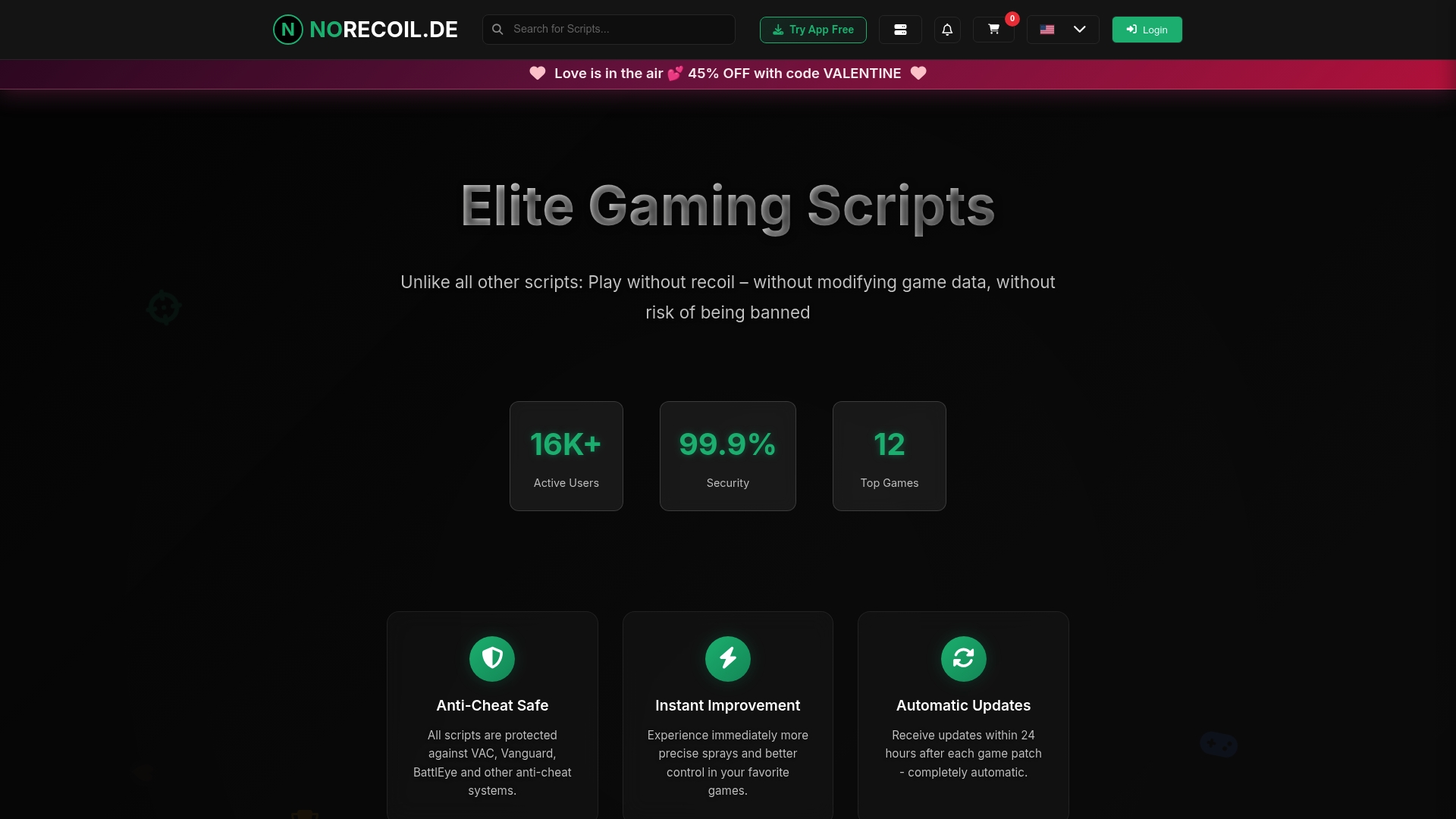
Enhance your gameplay confidently with Norecoil.de, a trusted platform offering premium recoil control, aim assistance, and versatile game-enhancing scripts. With over 50,000 active users worldwide, instant downloads, and automatic updates aligned with the latest game patches, you get the reliability and safety needed to compete at the highest level. Explore the full range of scripts available for leading competitive titles at Norecoil.de and discover trial offers via Discord to test their seamless performance firsthand. Take control of your competitive future today by visiting Norecoil.de and equip yourself with solutions designed to keep you one step ahead in the anti-cheat arms race.
Frequently Asked Questions
What are anti-cheat scripts and why are they important in competitive gaming?
Anti-cheat scripts are specialized software tools designed to detect and prevent cheating in competitive gaming. They maintain gameplay integrity by identifying unauthorized modifications, preventing automated gameplay, and ensuring a fair environment for all players.
How do anti-cheat scripts detect cheating?
Anti-cheat scripts use several detection methods including signature-based detection, behavior-based detection, and AI-driven detection. These methods work together to identify known cheats, monitor gameplay for suspicious actions, and learn from player behaviors to recognize new cheating techniques.
What risks do players face when using cheat scripts?
Players who use cheat scripts face significant risks including permanent account suspension, loss of competitive opportunities, reputational damage, and potential legal issues due to violation of terms of service and intellectual property rights.
How can players contribute to maintaining a fair gaming environment?
Players can help maintain a fair gaming environment by actively supporting community-driven anti-cheat initiatives, reporting suspicious behaviors, and prioritizing skill development and fair play over any short-term competitive advantages.
Recommended
- 🎯 No Recoil Scripts 2026 ⚡ FREE Trial | Valorant, CS2, Apex | 50K+ Users ✅
- 🎯 CS2 No Recoil Script FREE 2026 ⚡ Perfect Spray Control | VAC SAFE | 15K+ Users
- 🎯 Rust No Recoil Script 2026 | PvP & Base Defense | Anti-Cheat Safe
- 🎯 THE FINALS No Recoil Script 2026 | Team FPS | Anti-Cheat Safe
Article generated by BabyLoveGrowth
Bereit für null Recoil?
Fertige No-Recoil-Makros für deine Spiele — sofort freigeschaltet.