Why Anti-Cheat Detection Matters in Competitive Gaming
08. Februar 2026
For many competitive gamers in Europe and North America, every match in Valorant or CS2 can feel like a test of trust as much as skill. Cheaters using advanced scripts threaten fair competition, pushing both players and developers to adapt quickly. Mastering safe anti-cheat script use is now part of the meta, and understanding how anti-cheat systems monitor behavior in real time can give you a clear edge while protecting your hard-earned reputation.
Table of Contents
- Anti-cheat Detection In Gaming Explained
- Main Types And Evolving Cheat Methods
- How Modern Anti-cheat Systems Work
- Fair Play, Reputation, And Player Trust
- Legal Risks And Consequences Of Cheating
- Safe Script Use And Avoiding Detection Errors
Key Takeaways
| Point | Details |
|---|---|
| Anti-cheat systems are crucial for fair play | They monitor player actions and detect cheating in real-time to maintain game integrity. |
| Cheat methods are becoming more sophisticated | Techniques have evolved to include undetectable modifications that challenge detection capabilities. |
| Legal consequences of cheating are significant | Players risk account suspension, monetary penalties, and permanent bans for infractions. |
| Understand anti-cheat policies to avoid penalties | Regularly review game platform rules to minimize the risk of false positives and ensure compliance with game integrity standards. |
Anti-cheat detection in gaming explained
Competitive gamers face a constant battle against cheaters who seek unfair advantages through unauthorized game modifications. Anti-cheat systems represent the sophisticated digital guardians protecting game integrity and ensuring fair play across multiplayer environments. These advanced technologies work silently in the background, monitoring player actions and detecting anomalous behavior that could compromise gameplay fairness.
Anti-cheat mechanisms employ multiple sophisticated detection strategies, including kernel-level system monitoring to identify potential cheating attempts. These systems operate through several critical approaches:
- Real-time player action tracking
- Deep system scanning for unauthorized software
- Continuous behavior pattern analysis
- Automated detection of game modification signals
- Instant reporting and potential account suspension mechanisms
The technical complexity of modern anti-cheat systems goes far beyond simple rule enforcement. Advanced research reveals that these systems integrate deep system-level monitoring techniques comparable to cybersecurity rootkits. By utilizing kernel-level access, anti-cheat software can comprehensively scan computer systems, detecting subtle signs of potential game manipulation that would escape traditional monitoring methods.
Ultimately, anti-cheat detection represents a critical technological arms race between game developers and those attempting to circumvent fair play rules. The ongoing challenge involves creating increasingly sophisticated detection mechanisms that can adapt to emerging cheating techniques while maintaining player privacy and system performance.
Pro tip: Always keep your gaming systems updated and avoid downloading suspicious third-party software that could trigger anti-cheat system warnings.
Main types and evolving cheat methods
The world of gaming cheats is a dynamic and sophisticated ecosystem that continuously adapts to increasingly complex anti-cheat technologies. Cheat methods have evolved from simple exploits to highly technical, nearly undetectable modifications that challenge game developers’ detection capabilities. Modern cheating techniques represent a multi-million dollar underground economy driven by competitive gaming’s intense performance pressures.
Comparative research reveals several primary categories of game cheats that have become increasingly prevalent:
- Aimbots: Automated targeting systems that provide superhuman precision
- Wallhacks: Software enabling players to see through game environment barriers
- Speed hacks: Modifications allowing players to move faster than standard game mechanics
- Radar hacks: Tools revealing enemy positions outside normal game vision
- Driver-level cheats: Sophisticated modifications operating beneath standard game detection layers
Competitive gaming security experts highlight the escalating complexity of cheat development. Hardware-assisted cheats have become particularly challenging, using external devices that can manipulate game inputs without traditional software detection methods. These advanced techniques create a perpetual technological arms race between cheat developers and anti-cheat system designers.
The economics of game cheating have transformed from amateur efforts to a professional, monetized ecosystem. Cheat developers now create sophisticated tools sold through underground marketplaces, offering increasingly undetectable modifications that can bypass even kernel-level anti-cheat protections. This professionalization means cheats are no longer just hobbyist projects but complex software products with ongoing development and customer support.
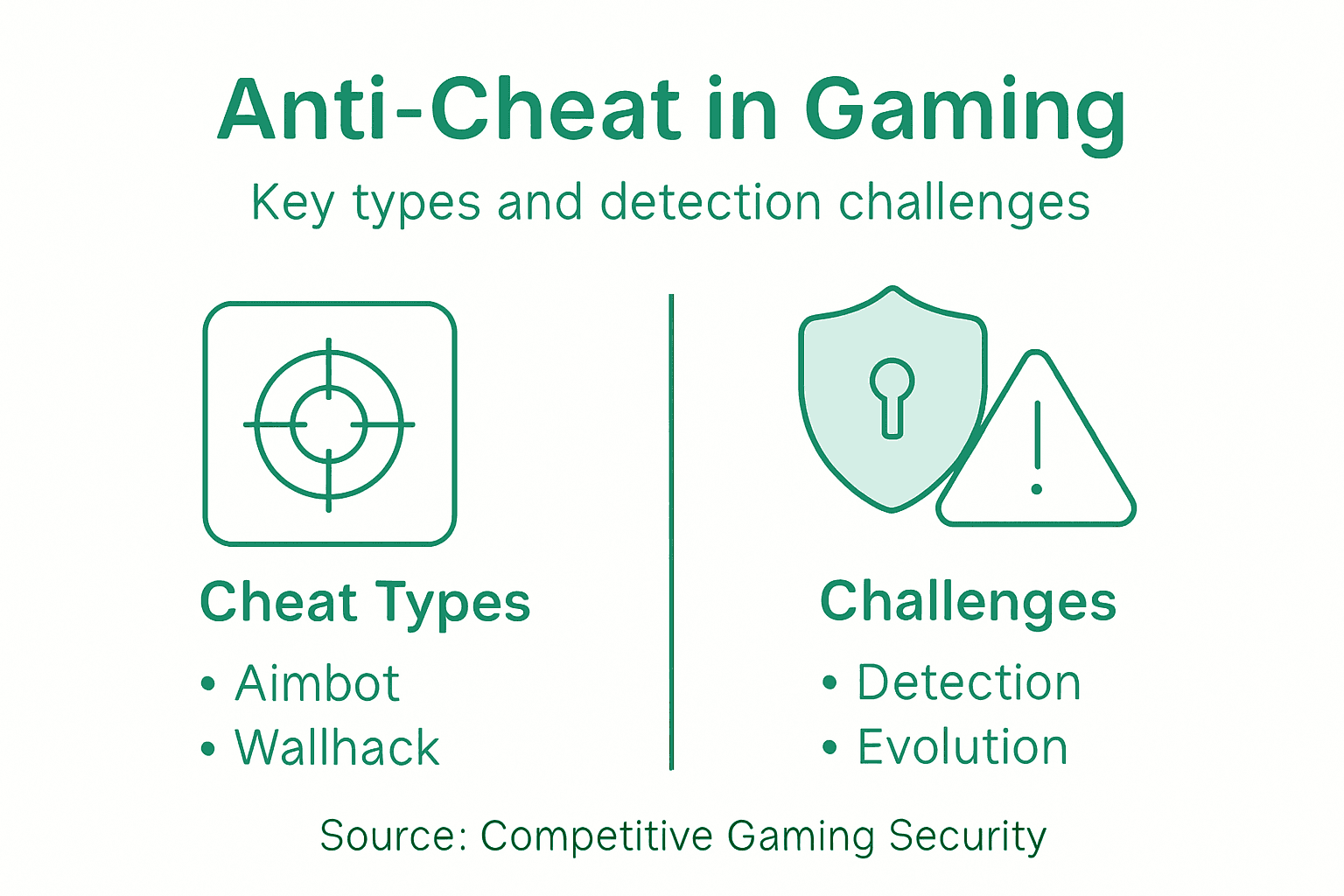
Here is a comparison of common cheat types and their detection challenges:
| Cheat Type | Typical Detection Difficulty | Key Detection Challenges |
|---|---|---|
| Aimbots | Moderate to High | Mimics legitimate behavior |
| Wallhacks | Low to Moderate | Requires deep environment scanning |
| Speed hacks | Moderate | Timing analysis needed |
| Radar hacks | High | Stealth data access |
| Driver-level cheats | Very High | Operates outside standard checks |
Pro tip: Stay informed about the latest anti-cheat technologies and maintain updated gaming systems to minimize vulnerability to emerging cheat methods.
How modern anti-cheat systems work
Anti-cheat systems have transformed from simple detection algorithms into sophisticated technological guardians protecting gaming environments. These advanced platforms now leverage cutting-edge machine learning and deep neural networks to identify and neutralize increasingly complex cheating techniques in real-time competitive gaming scenarios.
Next-generation anti-cheat frameworks are revolutionizing cheat detection through innovative approaches:
- Sophisticated machine learning models
- Multi-view feature analysis
- Real-time behavioral pattern recognition
- Server-side comprehensive monitoring
- Adaptive detection algorithms
Visual-based detection networks have emerged as powerful tools in modern anti-cheat technologies. These systems utilize deep learning and computer vision techniques to analyze gameplay mechanics, segmenting high-resolution images and employing multi-scale feature fusion to quantify potential cheating behaviors with unprecedented accuracy.
The core functionality of modern anti-cheat systems involves multiple detection layers that work simultaneously. Kernel-level monitoring provides deep system access, while machine learning algorithms continuously analyze player behavior patterns, comparing them against extensive databases of legitimate and suspicious gameplay signatures. This multi-dimensional approach allows for near-instantaneous identification of potential cheating attempts, dramatically reducing the window of unfair advantage.
Pro tip: Regularly update your gaming systems and anti-cheat software to stay ahead of emerging cheat detection technologies.
Fair play, reputation, and player trust
Competitive gaming represents more than just skill - it’s a complex ecosystem built on mutual respect, integrity, and trust. When cheating undermines these fundamental principles, the entire gaming community suffers, creating a toxic environment that erodes the core values of competitive play.
Cheating in online games fundamentally damages the competitive landscape through several critical mechanisms:
- Destroys player confidence in game fairness
- Reduces motivation for legitimate skill development
- Creates unequal competitive environments
- Drives away dedicated, skilled players
- Undermines the economic sustainability of competitive platforms
The psychological impact of widespread cheating extends far beyond immediate gameplay experiences. Players invest significant time and emotional energy into mastering game mechanics, developing strategies, and building personal reputation. When cheating becomes prevalent, this investment feels meaningless, leading to widespread disillusionment and potential community fragmentation.
Reputational damage from cheating impacts not just individual players but entire gaming ecosystems. Esports organizations, game developers, and competitive platforms must continuously invest in sophisticated anti-cheat technologies to maintain player trust. The cost of inaction is profound - potential player exodus, reduced engagement, and long-term erosion of community standards that define healthy competitive environments.
Pro tip: Support and participate in communities that actively promote fair play and hold cheaters accountable.
Legal risks and consequences of cheating
Cheating in competitive gaming is not merely an ethical breach but a potential legal minefield with serious consequences that extend far beyond temporary account suspensions. The digital landscape of competitive gaming increasingly intersects with complex legal frameworks that can transform what seems like a simple game violation into a significant legal liability.
Cheating software usage exposes players to multiple legal risks, including:
- Breach of game terms of service
- Copyright infringement potential
- Potential monetary penalties
- Risk of permanent platform exclusion
- Possible civil litigation
Online gaming legal frameworks reveal a complex ecosystem where cheating can intersect with broader criminal activities. Game developers and platform owners are increasingly implementing robust legal strategies to protect their intellectual property and maintain fair competitive environments. These approaches range from technical deterrence to potential legal action against persistent offenders.
The financial and reputational stakes of cheating have never been higher. Professional esports organizations, tournament hosts, and gaming platforms now treat cheating as a serious offense with potential career-ending consequences. Players caught using unauthorized modifications or cheating scripts can face not just immediate disqualification but long-term bans that can effectively end competitive gaming aspirations.
The following table summarizes main legal risks and their long-term impact for competitive gamers:
| Legal Risk | Typical Consequence | Long-Term Impact |
|---|---|---|
| Breach of Terms | Account suspension | Loss of access and reputation |
| Copyright Infringement | Civil litigation | Potential monetary penalties |
| Platform Exclusion | Permanent ban | Career-ending for professionals |
| Criminal Activity | Legal prosecution | Damaged personal record |
Pro tip: Always read and understand the terms of service for any gaming platform to comprehend the full legal implications of potential rule violations.
Safe script use and avoiding detection errors
Anti-cheat detection represents a complex technological landscape where players must navigate carefully to avoid unintended consequences. Understanding the intricate mechanisms of these systems is crucial for maintaining account integrity and ensuring fair gameplay without triggering unnecessary security flags.
Anti-cheat systems employ sophisticated detection strategies that can identify potentially suspicious behaviors through multiple verification channels:
- Signature-based scanning techniques
- Behavioral pattern recognition
- Real-time process monitoring
- Kernel-level system inspection
- Machine learning anomaly detection
Game policy compliance requires players to understand the nuanced boundaries between legitimate performance enhancement and prohibited modifications. Many anti-cheat systems utilize multi-layered verification processes that can detect even subtle alterations to game mechanics, making it essential for players to comprehend exactly what constitutes an acceptable script or modification.
The risk of false positives remains a significant concern in the anti-cheat ecosystem. Some legitimate software or hardware configurations might inadvertently trigger detection mechanisms, potentially resulting in temporary or permanent account restrictions. Players must remain vigilant, regularly updating their systems, using only verified tools, and maintaining transparency about any third-party software interactions with game environments.
Pro tip: Always review and understand the specific anti-cheat policies of each game platform before implementing any third-party scripts or modifications.
Master Competitive Gaming With Safe, Undetectable Scripts
The battle against cheating in competitive gaming is real and ongoing. You demand undetected, anti-cheat safe solutions that give you a legitimate edge without risking your account or reputation. Our platform deeply understands challenges like kernel-level detection, behavioral pattern analysis, and the evolving complexity of modern anti-cheat systems described in the article. At Norecoil.de, you get access to premium recoil control and aim assistance scripts designed precisely to bypass these stringent checks while enhancing your gameplay.
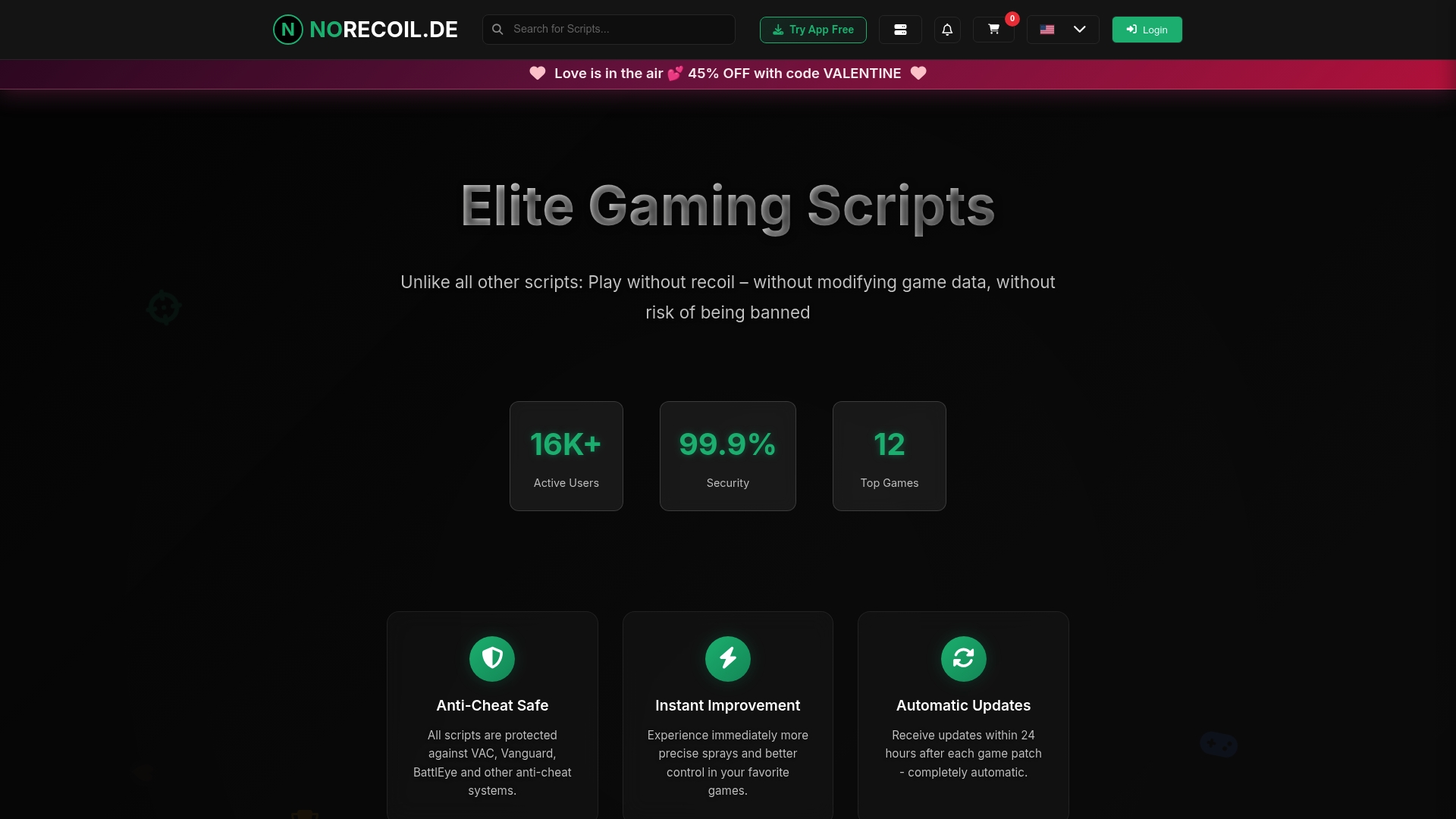
Why settle for risking bans or false positives when you can choose tools that are automatically updated to stay ahead of new anti-cheat patches? Join over 50,000 gamers worldwide who trust our scripts for safe, reliable performance across titles like Valorant, CS2, and Apex Legends. Discover our selection of individual options and bundles with lifetime support today. Take your competitive gaming to the next level now by visiting Norecoil.de and exploring our premium scripts collection.
Frequently Asked Questions
What is the purpose of anti-cheat detection in competitive gaming?
Anti-cheat detection helps maintain fair play by monitoring player behavior and identifying unauthorized modifications or cheating attempts. This ensures a level playing field for all participants in multiplayer environments.
How do modern anti-cheat systems work?
Modern anti-cheat systems use advanced technologies such as machine learning, kernel-level monitoring, and real-time behavioral analysis to detect and prevent cheating during competitive gameplay, adapting to new cheating methods as they emerge.
What are some common cheat types that anti-cheat systems aim to detect?
Common cheat types include aimbots, wallhacks, speed hacks, radar hacks, and driver-level cheats. Each type poses unique detection challenges for anti-cheat systems.
What are the legal consequences of using cheats in competitive gaming?
Using cheats can lead to serious legal consequences such as account suspension, potential civil litigation for copyright infringement, and permanent bans from gaming platforms, which can impact a player’s career in esports.
Recommended
- 🎯 Rust No Recoil Script 2026 | PvP & Base Defense | Anti-Cheat Safe
- 🎯 CS2 No Recoil Script FREE 2026 ⚡ Perfect Spray Control | VAC SAFE | 15K+ Users
- 🎯 Valorant No Recoil Script FREE Trial 2026 ⚡ All 22 Weapons | UNDETECTED
- 🎯 No Recoil Scripts 2026 ⚡ FREE Trial | Valorant, CS2, Apex | 50K+ Users ✅
Article generated by BabyLoveGrowth
Bereit für null Recoil?
Fertige No-Recoil-Makros für deine Spiele — sofort freigeschaltet.